Unhooking from Reactivity, Spring 2026
Week 1: May 8, 2026
Home practice:
SOBER space
Mindfulness of breath (see list of downloadable recordings on the home page)
The science around getting hooked
In order to understand the process of getting hooked, let's take a closer look at the automatic stress response:
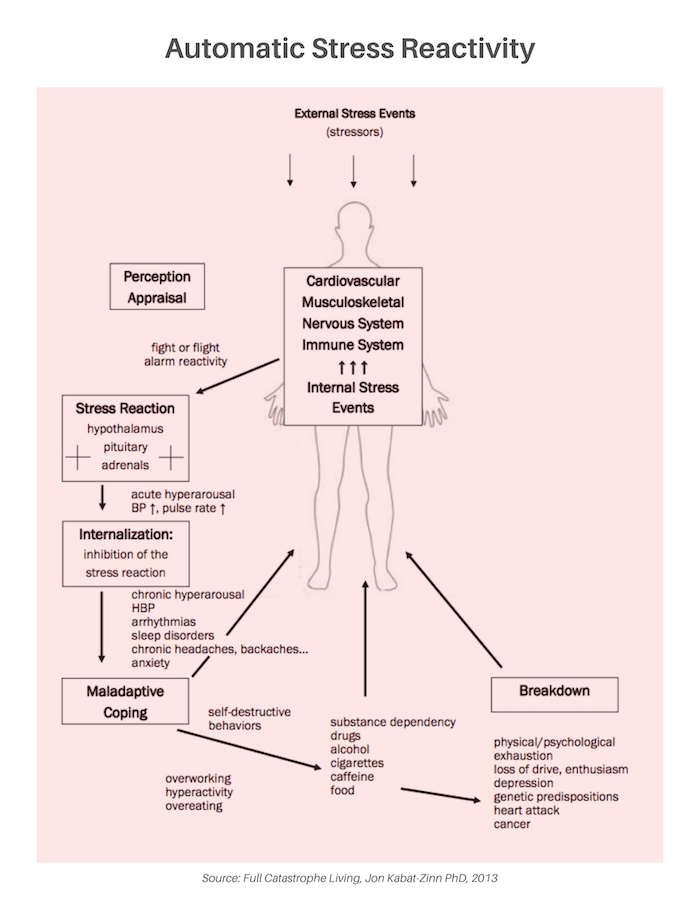
First, there’s a trigger: someone says something, makes a critical comment, wants to argue. Or we experience an anxious thought or memory or worry about the future, Or someone cuts us off in traffic.
Appraisal: this is the story we have about the triggering event, or the extra layer of assumptions we put on the trigger. We perceive that this trigger is a threat. This leads to a sense of negativity and aversion. We each have different perceptions of a given life event based on our past life experiences and conditioning. Note that this is a very fast, automatic process.
Getting Hooked: The combination of the trigger and our negative appraisal creates the feeling of being hooked. How does this feel for you? Often it’s a feeling of tightening or tension, of wanting to withdraw from the situation, or go on the attack. Maybe there’s self-blame, or anger. Mentally, our thoughts might spiral into negativity, blame, or worry.
Automatic Reaction: At this point, a powerful urge to do something about the discomfort takes over. What is it we really want here? Often it’s relief Relief from the unease and discomfort and the assumptions baked into our appraisal. So, we turn to what we enjoy: food, alcohol, work, shopping, sex, drugs. In moderation some of these things are delightful, and we can appreciate them. But, they can become a strong habit, when we start thinking that these things will always bring us nothing but comfort. We think our comfort behavior will take away all of our pain, then we're hooked. There is tremendous momentum in this process. Neuroplasticity says that “What fires together, wires together.” We strengthen this process automatically.
What to do?
We train first in recognizing what is going on. Using our awareness to name what’s happening, seeing it clearly. Then, we train in not continuing the chain reaction. We cultivate a strong mindfulness and self-compassion practice to help us see clearly and stay steady in the midst of difficult situations. We train in getting curious about what's actually happening in the moment, to see our assumptions and appraisals and automatic reactions. We increase our ability just to let things be as they are, to feel the discomfort without reacting to the discomfort (when possible- it’s also very skillful to disengage if things get too intense!) These practices weaken the hooked patterns.